
Loading...
Serving Cuyahoga Falls, OH and surrounding areas. (234) 432-0129
A deck, porch, or addition that shifts after a hard Ohio winter usually has one cause - footings that were not deep enough. We dig to the local frost line, pull the permit, and pass the inspection before the concrete is poured.
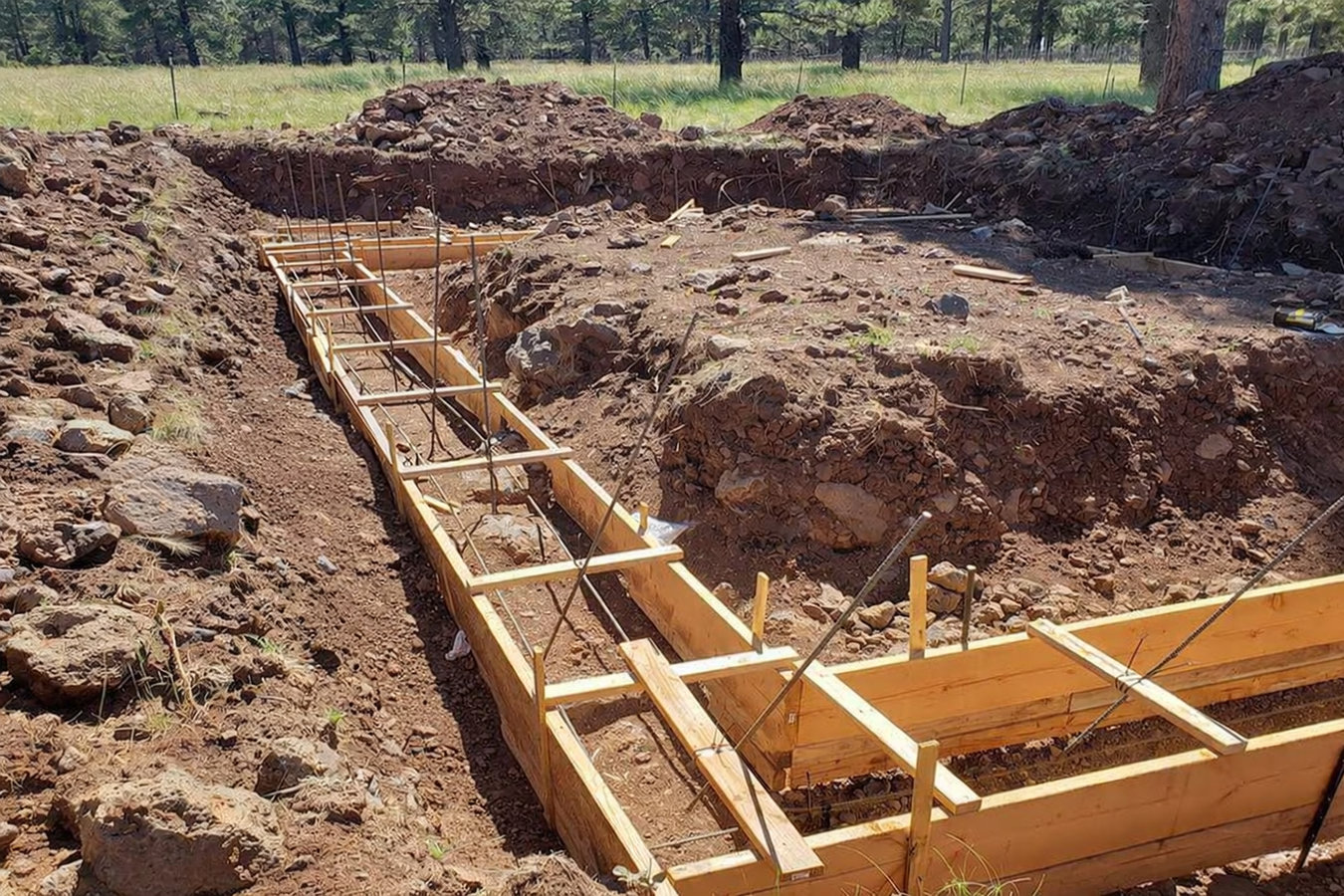
Concrete footings in Cuyahoga Falls means digging below the 36-inch local frost line, setting wood forms, placing reinforcing steel, and pouring concrete that a city inspector approves before it goes in. Most residential footing projects take one to two days of active work, followed by at least a week of curing time before construction can begin on the structure above.
A footing is the buried concrete pad that holds up everything above it - deck posts, porch columns, garage walls, addition foundations. Think of it as the shoe that spreads the weight of whatever stands on it across a wider area of soil. Without a properly sized footing at the correct depth, even a well-built structure can tilt, crack, or pull away from the house over time. In Cuyahoga Falls, where the ground freezes hard every winter, depth is the single most important variable - a footing above the frost line will move every season without exception. Homeowners who are also considering a full slab foundation for a new structure can often get both priced together during the same site visit.
Cuyahoga Falls has a large share of homes built between the 1920s and 1960s, and many have had decks, porches, and additions added over the decades. Some of that older work was done without footings deep enough to handle today's frost cycles - and the evidence shows up as tilting posts, sticking doors, or gaps between the addition and the main house. If you are repairing or expanding an older structure, it is worth having the existing footing depth assessed before the project budget is set.
If the posts holding up your deck or porch are no longer vertical, or if the structure has pulled slightly away from the house, the footings below those posts may have moved. In Cuyahoga Falls, this often happens after a hard winter when freeze-thaw cycles push shallow footings upward and they never fully settle back. A tilting post means the footing is no longer doing its job, and the structure above it is at risk.
If you notice cracks forming where an addition, sunroom, or attached garage meets the main house, the footings under that addition may be settling at a different rate than the original foundation. This kind of differential movement is common in older Cuyahoga Falls homes where additions were built at different times, sometimes without footings deep enough to match the original structure.
When a footing settles or shifts, the framing above it can rack slightly out of square, causing doors and windows to stick, bind, or no longer close properly. If this is happening in a room near an exterior addition or above a crawl space, it is worth having a contractor look at the footings before spending money on door or window adjustments that will not fix the underlying problem.
Any new structure that will be attached to your home or carry significant weight needs properly engineered footings before anything else gets built. This is not optional in Cuyahoga Falls - the city requires a permit and inspection for this work. Starting the footing conversation early matters because the footing design affects everything built on top of it.
We install concrete footings for decks, porches, additions, garages, and other structures on Cuyahoga Falls properties. Every project starts with a written estimate that specifies the number of footings, the planned depth, and what is included in the price - not just a total number. We handle the permit application through the City Building Department, coordinate the pre-pour inspection, and call Ohio 811 for utility marking before any digging starts. When the footings are done, you have a city permit and inspection record you can keep in your home file. If your project is moving toward a larger concrete scope, we can also quote foundation raising work alongside the footing installation.
Our experience with Cuyahoga Falls soil conditions matters here. Clay-heavy ground near the river corridor expands and contracts with moisture changes, and older fill soil in some neighborhoods is less stable than undisturbed native ground. We check what is in the ground at your specific address before committing to a price - so you are not surprised by a change order after the dig starts. That site-specific assessment is the difference between a footing that lasts and one that needs attention again in five years.
For homeowners adding or replacing a deck or porch - the most common footing project in Cuyahoga Falls, requiring frost-line depth and a city permit before framing begins.
For room additions, sunrooms, and attached garages that need new load-bearing footings sized to the structure and dug to match the existing foundation depth.
For new detached garages on Cuyahoga Falls properties - a separate structure that requires its own footing system and building permit.
For homes in Cuyahoga Falls older neighborhoods where original footings from the 1920s through 1960s are too shallow or too narrow for the structures they support.
Northeast Ohio ground can freeze 36 inches deep or more in a hard winter. That number is not a guideline - it is the minimum depth that keeps a footing below the soil movement that happens when the ground freezes and thaws. A footing above that depth will move every year. The structure on top of it will show the evidence within a few seasons: posts that are no longer plumb, decks that have separated from the house, addition walls that have cracked at the corners. In Cuyahoga Falls, there is no workaround for frost depth - it has to be right. Homeowners in Kent and Stow face the same 36-inch requirement and the same consequences when it is not met.
Cuyahoga Falls also has a large number of homes from the 1920s through the 1960s where original footings were poured under older, shallower standards. If you are adding a new structure to one of these homes, or repairing an existing deck or porch, there is a real chance the existing footings are not deep enough to reuse. The City of Cuyahoga Falls requires a permit and pre-pour inspection for any new footing work - which means an independent inspector confirms the depth is correct before the concrete ever goes in. That step protects you in a way that a contractor's word alone cannot.
Reach out and we will reply within one business day. We ask a few basic questions about your project and schedule a site visit before giving you a firm price - footing cost depends heavily on depth, soil conditions, and access, none of which can be assessed over the phone.
We apply for the building permit through the Cuyahoga Falls Building Department and coordinate underground utility marking through Ohio 811 before any digging starts. Both steps are required by law - we handle them so you do not have to make a single call to the city.
The crew digs to at least 36 inches - the frost-line depth in this area - sets forms, and places reinforcing steel inside the forms. A city inspector then visits to verify depth and dimensions before any concrete is poured. Once the inspection passes, we pour.
After the pour, concrete needs at least a week before light loading and closer to a month before full construction begins. We tell you the specific timeline for your project and conditions. Cold weather may require protective measures - we account for that in our schedule and communicate it to you in advance.
Spring crews fill up fast in Cuyahoga Falls - reach out now and we will reply within one business day with next steps. No commitment required to get a written estimate.
(234) 432-0129Northeast Ohio ground can freeze to about 36 inches in a hard winter. Every footing we install in Cuyahoga Falls is dug to that depth before a drop of concrete goes in. Footings that sit above the frost line will move every season - eventually cracking and tilting whatever is built on top.
American Concrete Institute on concrete constructionA large share of Cuyahoga Falls homes were built between the 1920s and 1960s, and we have worked on footings throughout those neighborhoods. We understand what original construction from that era looks like and how existing footing conditions affect new work - so we are not surprised by what we find when we start digging.
We pull every required permit through the City of Cuyahoga Falls Building Department and call Ohio 811 before excavation begins on every project. These are legal requirements, not optional steps. When the job is complete, you have a permit record and passed inspection on file with the city.
Ohio Utilities Protection Service - call before you digYou will receive a written estimate that spells out the number of footings, the planned depth, and exactly what is included in the price - not just a total number. That document protects you and holds us accountable to deliver what was quoted, with no mid-project surprises.
Footing work gets buried and forgotten the moment the soil goes back in - which is exactly why every step before the pour matters so much. The depth, the inspection, the written scope: those details determine whether your deck stays level ten winters from now.
Foundation lifting and leveling for Cuyahoga Falls homes where years of settling have caused movement or drainage issues around existing footings.
Learn MoreFull slab foundation construction for garages, additions, and new structures - a natural next step once footings are in place.
Learn MoreSpring booking fills up fast - reach out now and lock in your spot before the summer rush. Call or request a free written estimate online.